
The dream of boondocking is incredibly appealing. Setting up your mobile dwelling in a quiet forest, along a secluded beach, or in the high desert without another living soul in sight represents the ultimate freedom. However, modern off-grid living requires electrical power to keep the lights on, the water pump running, and appliances operating.
If you browse online forums or watch off-grid lifestyle videos, you might assume that a massive, multi-thousand-dollar solar panel system is a mandatory entry requirement. The glossy photos of roof-mounted panels and massive lithium battery banks suggest that you cannot enjoy the wilderness without them.
The truth is far more practical. Many off-grid enthusiasts spend thousands of dollars on complex solar installations that they rarely, if ever, fully utilize. Before you swipe your credit card for a high-end solar kit, it is vital to analyze your actual power needs, camping habits, and alternative power sources.
Key Takeaways
- Short trips (1-3 nights) rarely require solar if you have a properly sized, fully charged battery bank.
- Generators remain the most cost-effective and weather-independent backup power source for high-draw appliances.
- Your battery capacity is the actual limiting factor of your off-grid system, not the solar panels themselves.
- Solar is an investment in silence and convenience, but it is not a strict necessity for casual off-grid camping.
The Core Question: What is Your Boondocking Style?
To determine if solar is a necessary investment, you must first define how you plan to use your mobile dwelling. A weekend camper has vastly different electrical requirements than a full-time off-grid resident. Over-engineering a system for casual use is one of the most common financial mistakes in the off-grid community.
If your typical trip consists of leaving on Friday afternoon and returning by Sunday evening, your power needs are highly predictable. Your primary goal is simply surviving a 48-hour window without draining your battery bank below its safe threshold.
Conversely, if you plan to spend weeks at a time in remote public lands, power replenishment becomes your primary bottleneck. Without a way to put power back into your batteries, you will eventually find yourself in the dark. This is where the distinction between power storage and power generation becomes critical.
Calculate Your Off-Grid Daily Balance:
Match your daily appliance watt-hours against solar harvesting. Tally appliance loads with the RV Daily Power Calculator, and model your net battery autonomy with the Daily Solar Power Balance Calculator.
Understanding Your Daily Power Consumption
Before deciding how to generate power, you must understand how much power you actually consume. Every appliance in your dwelling draws a specific amount of electricity, measured in amp-hours or watt-hours.
Basic necessities like LED ceiling lights, the water pump, and the control board for your propane refrigerator draw very little power. High-draw appliances like microwaves, coffee makers, hair dryers, and air conditioners require massive amounts of energy. Understanding how much electricity does an RV use per day is the foundational step in this decision process.
If your daily consumption is low, a simple battery upgrade might solve your boondocking limitations for a fraction of the cost of a solar system. If your daily consumption is high, even a modest solar setup will struggle to keep up without generator assistance.
The Honest Decision Framework
To help you cut through the marketing hype, we have developed a four-part decision framework based on real-world off-grid experience. By evaluating these four factors, you can make an objective, budget-conscious decision.
1. Average Trip Duration
For trips lasting one to three nights, solar is almost never a strict necessity. A healthy, fully charged battery bank can easily power your lights, water pump, and basic electronics for a weekend. You simply charge the batteries at home before you leave, use the stored energy, and plug back in when you return.
For trips lasting four to seven nights, you will need some form of power replenishment. This is the transition zone where you must choose between a generator, alternator charging, or solar. For trips extending beyond a week, solar energy becomes highly desirable to maintain a continuous, self-sustaining power cycle.
2. Existing Battery Capacity and Chemistry
Your battery bank is the heart of your electrical system. If you are running a single, dealer-installed Group 24 lead-acid battery, you only have about 40 usable amp-hours of power. This limited capacity will struggle to get you through a single night, regardless of whether you have solar panels or not.
Upgrading to dual 6-volt golf cart batteries or a single 100Ah lithium (LiFePO4) battery can instantly double or triple your usable power. Often, spending $400 on a high-quality lithium battery provides far more practical boondocking value than spending $400 on a budget solar kit connected to a dying lead-acid battery.
3. Generator Access and Tolerance
Do you already own a portable inverter generator? If so, you already possess a highly reliable, weather-independent power source. A generator can run your air conditioner, microwave, and battery charger regardless of whether it is cloudy, rainy, or parked under dense forest canopy.
The primary drawbacks of generators are noise, fuel storage, and campsite restrictions. Many public campgrounds enforce strict generator hours, meaning you cannot run them early in the morning or late at night. If you despise the sound of a small engine interrupting the peace of nature, solar becomes the preferred alternative.
4. Upfront Budget vs. Long-Term Value
A quality solar installation requires an investment in panels, a charge controller, heavy-gauge wiring, fuses, and mounting hardware. If you hire a professional, labor costs can easily double the price of the system. You must ask yourself if that capital would be better spent on fuel, park passes, or other dwelling upgrades.
If you only boondock three or four times a year, the return on investment for a solar system is incredibly low. However, if you live in your dwelling full-time or camp off-grid dozens of times a year, the quiet, automated power of solar pays massive dividends in comfort and convenience.
Analyzing the Alternatives to Solar
If you decide not to install solar panels, you still have several highly effective methods for keeping your battery bank charged while boondocking. Let's look at how these alternatives perform in real-world scenarios.
| Power Source | Upfront Cost | Weather Dependent? | Noise Level | Best Suited For |
|---|---|---|---|---|
| Battery Only | Low (Battery Cost) | No | Silent | Weekend campers (1-3 nights) |
| Inverter Generator | Moderate ($300 - $1,000) | No | Low to Moderate | High-draw appliances, cloudy areas |
| DC-to-DC Charger | Low ($150 - $300) | No | Silent | Frequent travelers, moving daily |
| Solar Power System | High ($500 - $3,000+) | Yes (Requires Sun) | Silent | Long-term boondocking, quiet seekers |
The "Battery-Only" Strategy
Many campers underestimate what a high-quality battery bank can do on its own. If you upgrade to a 200Ah lithium battery bank, you have approximately 2,400 watt-hours of usable energy. For a conservative camper using LED lights, a water pump, and charging phones, this bank can easily last 4 to 5 days without a single drop of charge input.
This setup is completely silent, requires zero maintenance, and involves no complex roof installations or external wiring. For the casual boondocker, investing solely in battery capacity is often the smartest and most cost-effective path forward.
The Portable Inverter Generator
A small, 2,000-watt inverter generator is the ultimate off-grid insurance policy. It runs on gasoline or propane, starts up with a pull cord or button, and delivers clean, reliable power regardless of weather conditions. If you run into a three-day storm, a solar system will produce virtually nothing, while a generator will perform flawlessly.
When comparing an RV solar vs generator comparison, the generator wins on raw power output and reliability per dollar spent. However, it loses on the user experience scale due to the need to store flammable fuel, perform oil changes, and tolerate the continuous hum of an engine.
DC-to-DC Charging (Alternator Power)
If your off-grid lifestyle involves moving to a new campsite every few days, a DC-to-DC charger is an incredible tool. This device takes power from your towing or auxiliary vehicle's alternator while you travel and pumps it directly into your dwelling's house batteries at a high rate.
A standard 30-amp DC-to-DC charger can fully replenish a 100Ah lithium battery during a three-hour drive between campsites. This means you arrive at your next destination with a completely full battery bank, all without needing a single solar panel on your roof.
When Does Solar Make Absolute Sense?
While solar is not a strict necessity for everyone, there are specific scenarios where it transitions from a luxury to an absolute necessity. If you fall into any of the following categories, investing in a solar system is highly recommended.
First, if you plan to camp in one remote spot for more than four consecutive days without moving your dwelling or running a generator, solar is your only viable option. It provides a silent, continuous stream of energy that keeps your batteries topped off day after day.
Second, if you value absolute silence and environmental preservation, solar is unmatched. There is a unique peace that comes from watching the sunset in complete silence, knowing your cold drinks and evening lights are powered entirely by the sun.
Finally, solar is ideal for maintaining your batteries during periods of storage. A small solar setup will keep your house batteries topped off and healthy while your dwelling is parked in a storage lot, preventing the parasitic draws from completely draining and damaging your expensive battery bank.
How to Start Small: The Portable Solar Option
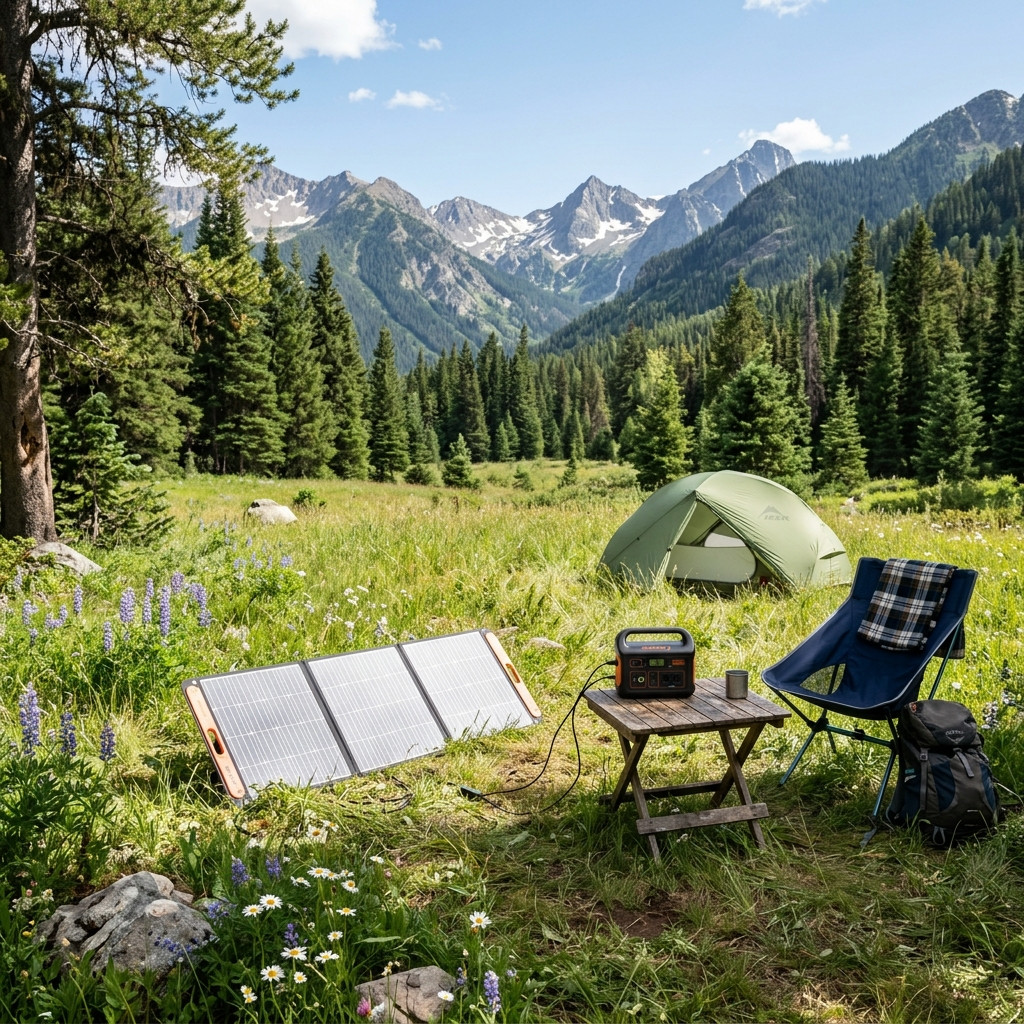
If you decide you want the benefits of solar but are hesitant to commit to a permanent, expensive roof-mounted installation, portable solar panels (often called solar suitcases) offer the perfect middle ground.
These folding panels can be stored in a closet or under a bed and set up on the ground only when you need them. They allow you to park your mobile dwelling in the cool shade of a tree while placing the panels out in the direct sunlight using an extension cable.
Portable panels are highly efficient because you can manually angle them directly toward the sun throughout the day. This setup is significantly cheaper than a roof-mounted system and requires no drilling into your dwelling's roof structure, making it an excellent entry point for testing your off-grid interest.
Conclusion: Making Your Final Decision
Do you really need solar for boondocking? For the vast majority of casual, weekend campers, the answer is a definitive no. You can enjoy incredible off-grid experiences simply by upgrading your battery bank, practicing conservative energy habits, or carrying a small backup generator.
However, if you find yourself falling in love with the off-grid lifestyle, craving absolute silence, and extending your trips past the four-day mark, solar becomes a transformative upgrade. It changes the way you travel, shifting your focus from managing a dwindling power supply to enjoying a self-sustaining, modern home in the wild.
Assess your current battery bank, calculate your actual daily usage, and start with the simplest, most cost-effective solution. The wilderness is waiting, and you do not need a multi-thousand-dollar solar array to go out and enjoy it.
Frequently Asked Questions
How long can I boondock with just a standard battery?
A standard, dealer-installed lead-acid battery typically provides about 40 to 50 usable amp-hours. With conservative usage (running only LED lights, the water pump, and charging a phone), this will last approximately 24 to 36 hours. Upgrading to a lithium battery can easily extend this to 3 to 4 days without needing a recharge.
Is a generator cheaper than a solar setup?
Yes, in terms of upfront costs, a portable inverter generator is significantly cheaper. A high-quality 2,000-watt generator costs between $400 and $1,000 and is ready to use out of the box. A comparable solar setup with panels, charge controllers, wiring, and professional installation can easily range from $1,000 to $3,000+.
Can I add solar to my mobile dwelling later if I change my mind?
Absolutely. Solar systems are highly modular. You can start by upgrading your battery bank today, add a portable solar suitcase next season, and eventually transition to a fully integrated, roof-mounted system as your budget and boondocking needs grow.
Do solar panels work on cloudy or rainy days?
Solar panels still produce electricity on cloudy days, but their output drops significantly. Depending on the density of the cloud cover, panels may only produce 10% to 25% of their rated capacity. This is why having a backup power source, like a generator or a robust battery bank, is essential for extended trips.